

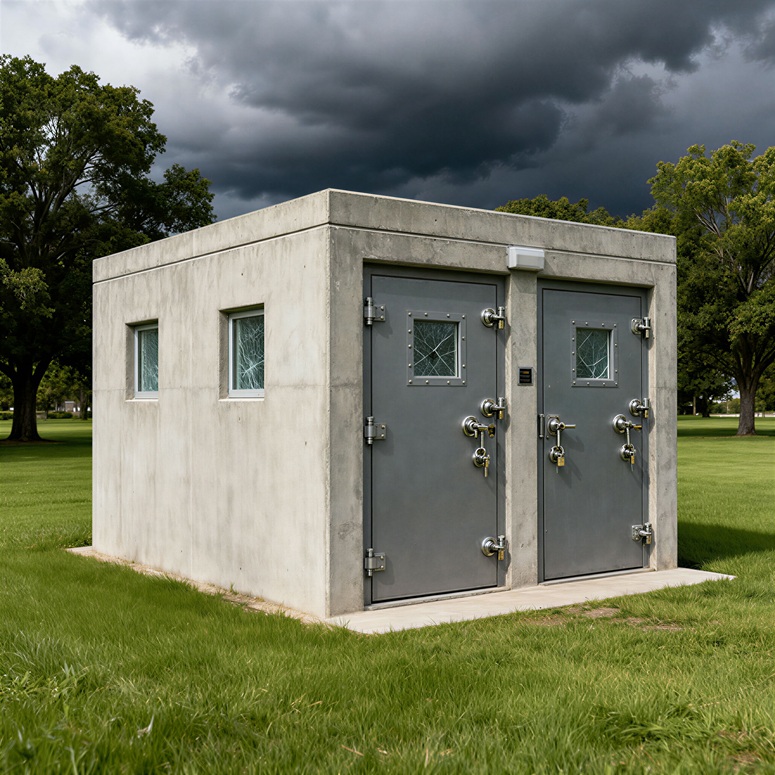
Are Above-Ground Tornado Shelters Really Safe?
By Valley Storm SheltersIf you live in Alabama, Tennessee, or the surrounding area, you recognize the very real risk associated with tornadoes. You know that traditional underground tornado shelters offer immense protection, and you may have concerns about above-ground models. The truth is that certified above-ground shelters, when professionally certified and installed, can rival the protection offered by underground shelters, and without the added safety hazards of underground.
Learn more by consulting with our experienced tornado shelter pros at Valley Storm Shelters today.
It’s a Myth that Underground Is the Only Safe Place to Be in a Tornado
Weathering a tornado in a basement is not a new concept, and when it’s the only option, it’s the best option. Furthermore, underground tornado shelters are the traditional approach to enhanced protection and are very effective.
Tornadoes and related concerns, however, are on the rise, and underground shelters are not always a good option or viable in your home. This is especially true in areas with high water tables, prone to flooding, or with dense bedrock. Ultimately, both above-ground and underground tornado shelters are subject to the same rigorous safety standards. This includes rigorous independent testing under EF5 tornado conditions—250 mph wind speed and high velocity impact tests conducted by the Texas Tech University National Wind Institute.
In other words, above-ground tornado shelters can offer the same level of protection that underground shelters do. And working closely with a trusted tornado shelter expert is the surest means of maximizing your family’s safety.
Key Safety Standards
Above-ground tornado shelters must meet the same key safety standards that underground shelters are required to meet.
Anchoring and Structure
Above-ground tornado shelters must meet rigorous structural tie-down requirements. Structural and impact protection is achieved through heavy-gauge steel or reinforced concrete that is anchored directly to your home or garage’s concrete foundation.
Wind-Load Resistance
Like underground tornado shelters, above-ground shelters are engineered to withstand 3-second wind gusts of 250 mph.
Debris Impact
The standard for debris-impact safety in a tornado shelter is that the walls and roof must withstand the impact of several 15-pound 2x4” boards traveling at 100 mph. Your certified above-ground tornado shelter meets that same rigorous standard.
The Advantages of Above-Ground Tornado Shelters
There are specific safety advantages associated with above-ground shelters that you may not have considered.
Far Less Risk of Flooding
An above-ground tornado shelter is at risk of flooding only if the area itself floods. This is especially important in areas with high water tables. Being underground during a storm does create an inherent vulnerability that is worth considering.
Instant Accessibility
There is no climbing in or out of an above-ground shelter, which means easy access for family members with mobility issues, children, and pets. This can offer tremendous peace of mind, which is the guiding motivation behind tornado shelters.
Long-Term Protection and Thinking
Many above-ground shelters feature doors large enough for wheelchair access, and this is worth considering down the line.
The maintenance on an above-ground shelter that is installed inside is nearly zero. You simply walk inside with your family and shut the door. All your essential supplies (shoes, water, flashlights, tools, and first aid) can be stored inside your shelter ahead of time.
Above-ground shelters can also be removed with tools and moved to your new home if you relocate. Your next home buyer may not want an underground shelter or an above-ground shelter, but they are not obligated to keep an above-ground shelter when they purchase your home.
Learn More about the Protection an Above-Ground Tornado Shelter Can Offer
Our knowledgeable tornado shelter professionals at Valley Storm Shelters have the experience and knowledge to help you effectively address your safety concerns. And we offer state-of-the-art options when it comes to our above-ground models. Learn more by contacting us online or giving us a call at 256-890-4265 today.