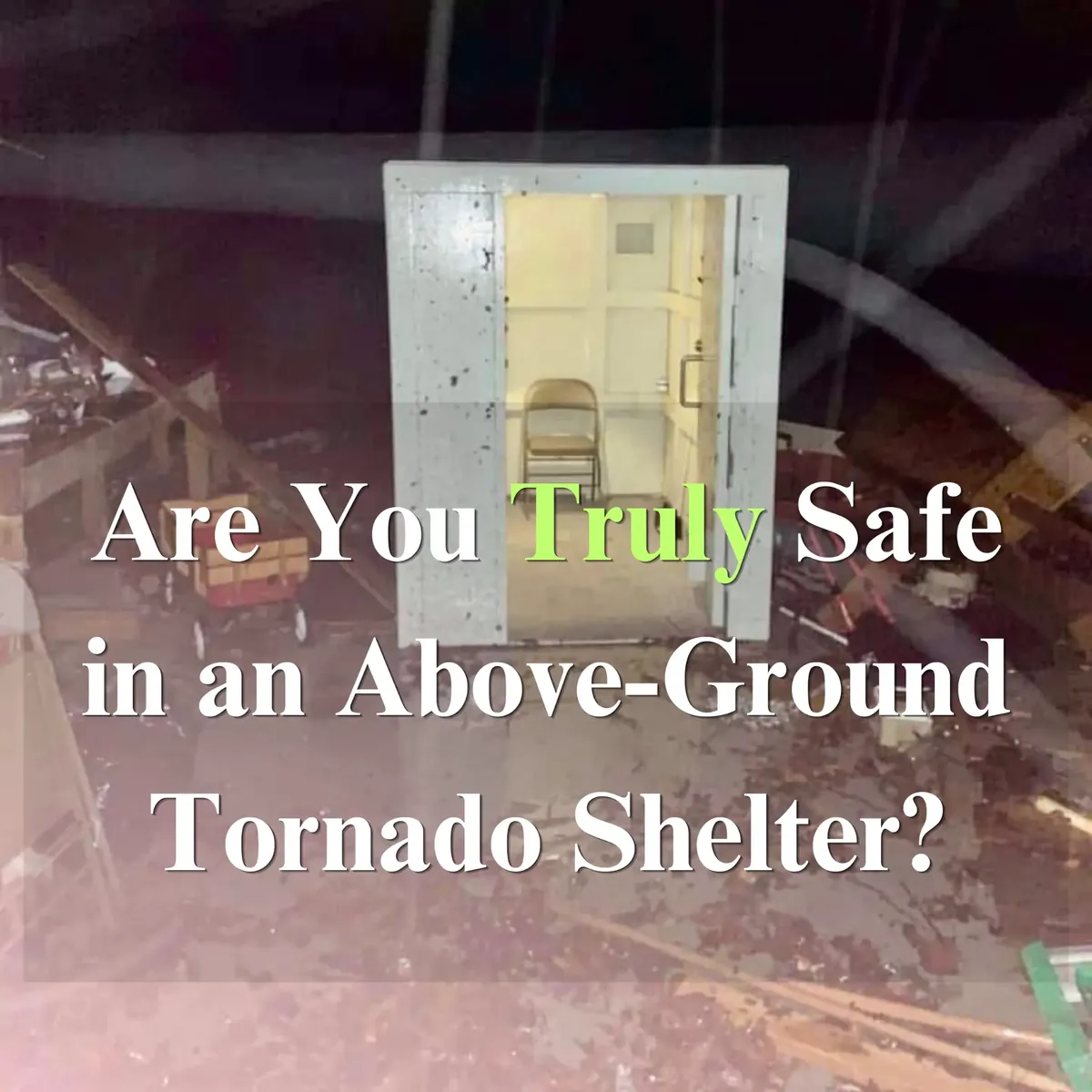
Are You Truly Safe in an Above-Ground Tornado Shelter?
By Valley Storm Shelters | 0 CommentsTo the surprise of many people, the answer is a resounding yes.
While many of us were told from a young age to get underground during a tornado, that is not necessarily the case. For many people, going underground simply is not an option. For elderly individuals, stairs leading down into a shelter or crawlspace can be too steep or dangerous. In many areas, basements are also uncommon due to bedrock, high water tables, or poorly draining soil.
For this reason, above-ground tornado shelters have become one of the fastest-growing shelter options in the United States.
The Evolution of Above-Ground Shelters
Although above-ground shelters have existed for decades, the Federal Emergency Management Agency (FEMA) published residential safe room guidance beginning in 1998–1999 [1]. This established modern standards for the quality and strength of above-ground shelters. These standards helped lead to the growth of many reputable companies that now undergo proper third-party testing to verify the strength and performance of their shelters.
These FEMA standards, specifically FEMA P-320 and P-361, have contributed significantly to the rise in popularity of above-ground shelters in recent years [2]. In fact, FEMA explicitly states that an above-ground safe room built to these specifications can provide “near-absolute protection” against extreme wind events, including EF5 tornadoes with wind speeds exceeding 200 mph [3].
Real-World Survival Evidence
In addition to laboratory testing, the devastating tornado outbreaks of 2011 caused many families to take a much closer look at above-ground safe rooms. These outbreaks included powerful tornadoes that destroyed well-built homes—even some with basements.
Since then, above-ground shelters have been installed in communities across the country, and many have survived direct tornado strikes. This provides real-world evidence of their effectiveness—not only in university and laboratory testing but in actual tornado events. For instance, following the catastrophic EF5 tornado in Moore, Oklahoma, investigators found multiple above-ground safe rooms that remained intact amid the total destruction of the surrounding homes [4].
Accessibility and Peace of Mind
For many families, above-ground shelters offer the ideal solution. They can be installed in a garage or on a backyard concrete slab, allowing your family to move from exposure to safety in a matter of seconds.
This is especially helpful for small children, pets, and elderly family members, since stairs and narrow crawl spaces can slow access and increase the risk of accidents during an emergency.
| Feature | Above-Ground Shelter | Traditional Basement |
|---|---|---|
| Accessibility | Quick and easy, no stairs | Requires navigating stairs |
| Flood Risk | Minimal to none | Susceptible to flooding |
| Installation | Garage, patio, or interior room | Requires excavation |
| Protection Level | “Near-absolute” (if FEMA compliant) | High, but debris can trap occupants |
Debunking the Underground Myth
While many of us have heard our whole lives that we must go underground during a tornado, this is somewhat of a misconception—much like the myth of sheltering under an overpass.
If your shelter comes from a reputable company, is built from real steel, is engineered for extreme tornado forces, and has undergone independent testing, your odds of survival may be equal to—or in some cases even better than—sheltering in a traditional basement or crawlspace.
While it may take some time to get comfortable with the idea of staying above ground as a tornado approaches, there are many photos online of shelters that have survived. A real Valley Storm Shelters tornado shelter recently survived a powerful tornado. A photo was sent to us by our customer’s family after she—an 81-year-old woman—survived the storm inside the shelter with her young grandson while their home was swept away around them.
While we pray that none of our customers are ever directly impacted by a tornado, it means everything to us that this customer and her grandson survived without injury.
Learn More:
- If you would like to learn what storm shelter engineering features to look for when considering an above-ground shelter, click here to read our guide.
- To learn more about the history, efficacy, and research on above-ground shelters, watch this video.